Needs first. Plain English. Trauma aware.
Trauma or neuro? (thinking tool)
Not diagnostic — Last updated: January 2026
This provides a framework for thinking about patterns. It is NOT a diagnostic tool and does NOT replace professional assessment.
This provides a framework for thinking about patterns. It is NOT a diagnostic tool and does NOT replace professional assessment.
Visual pathways map
This visual shows two pathways to consider when someone is struggling. It's not diagnostic — it's a thinking tool to help organize observations and choose next steps.
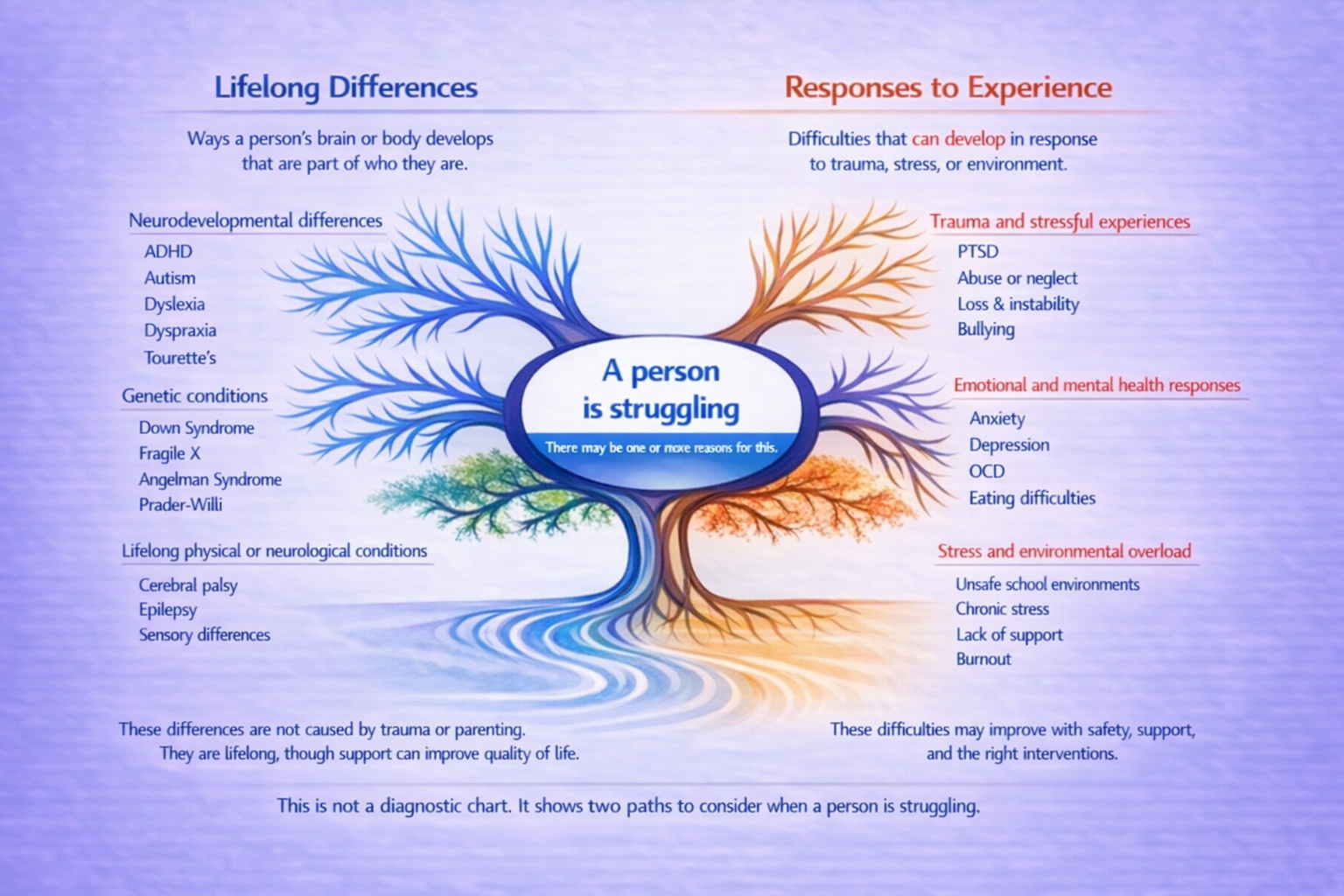
This is not a diagnostic chart
It shows two paths to consider when a person is struggling. Many people have elements from both sides — that's common and expected.
It shows two paths to consider when a person is struggling. Many people have elements from both sides — that's common and expected.
Thinking framework
Use these questions to organize what you're observing. This helps you choose appropriate support, not diagnose conditions.
Patterns suggesting neurodevelopmental differences
- Lifelong patterns from early childhood
- Consistent across different environments
- Not linked to specific stressful events
- Sensory sensitivities always present
- Social communication differences across contexts
- Executive function challenges
- Attention regulation in most situations
Key question: Has this always been how their brain works?
Patterns suggesting trauma/stress responses
- Clear change or worsening after specific event
- Hypervigilance and threat detection
- Flashbacks, intrusive memories, nightmares
- Avoidance of reminders
- Regulation varies with stress levels
- Better in calm/safe, worse in stressful
- Freeze/fawn/fight/flight responses
Key question: Did difficulties start after something happened?
They often overlap
Neurodivergent people are more vulnerable to trauma. Trauma affects executive function. You can have both. Support should address current needs regardless of causes.
Neurodivergent people are more vulnerable to trauma. Trauma affects executive function. You can have both. Support should address current needs regardless of causes.
If patterns suggest neurodevelopmental
Focus on environmental adjustments that work with how the brain processes information.
What to do:
- Request SEN Support and reasonable adjustments
- Track patterns: transitions, sensory input, change, demand
- Consider assessment pathways in parallel
- Focus on predictability, clear communication, sensory accommodations
If patterns suggest trauma/stress
Focus on safety, stability, reducing stressors, building regulation skills.
What to do:
- Stabilize safety and routines first
- Request support that reduces current stressors
- Consider trauma questionnaire for structured framework
- Focus on felt safety, co-regulation, reduced demands
What if it's both?
Many people have both neurodevelopmental differences AND trauma responses. This is very common.
Support approach when it's both:
- Start with safety and stabilization
- Add environmental adjustments for neurodevelopmental needs
- Don't force "exposure" during unstable periods
- Recognize stress makes neurodevelopmental differences more pronounced
- Address both regulation AND environmental barriers
Most important principle
Support based on current needs works whether difficulties are neurodevelopmental, trauma-related, or both. The label matters less than removing barriers and providing appropriate support now.
Support based on current needs works whether difficulties are neurodevelopmental, trauma-related, or both. The label matters less than removing barriers and providing appropriate support now.
Common questions
Can you have autism/ADHD AND trauma?
Yes, absolutely. Research shows neurodivergent people experience trauma at higher rates.
Yes, absolutely. Research shows neurodivergent people experience trauma at higher rates.
Do I need to figure this out before getting support?
No. Support should start based on current needs regardless of cause. Understanding patterns helps choose support type, but shouldn't delay it.
No. Support should start based on current needs regardless of cause. Understanding patterns helps choose support type, but shouldn't delay it.
What if professionals disagree?
Focus on what support helps right now. The diagnostic debate shouldn't prevent practical support.
Focus on what support helps right now. The diagnostic debate shouldn't prevent practical support.