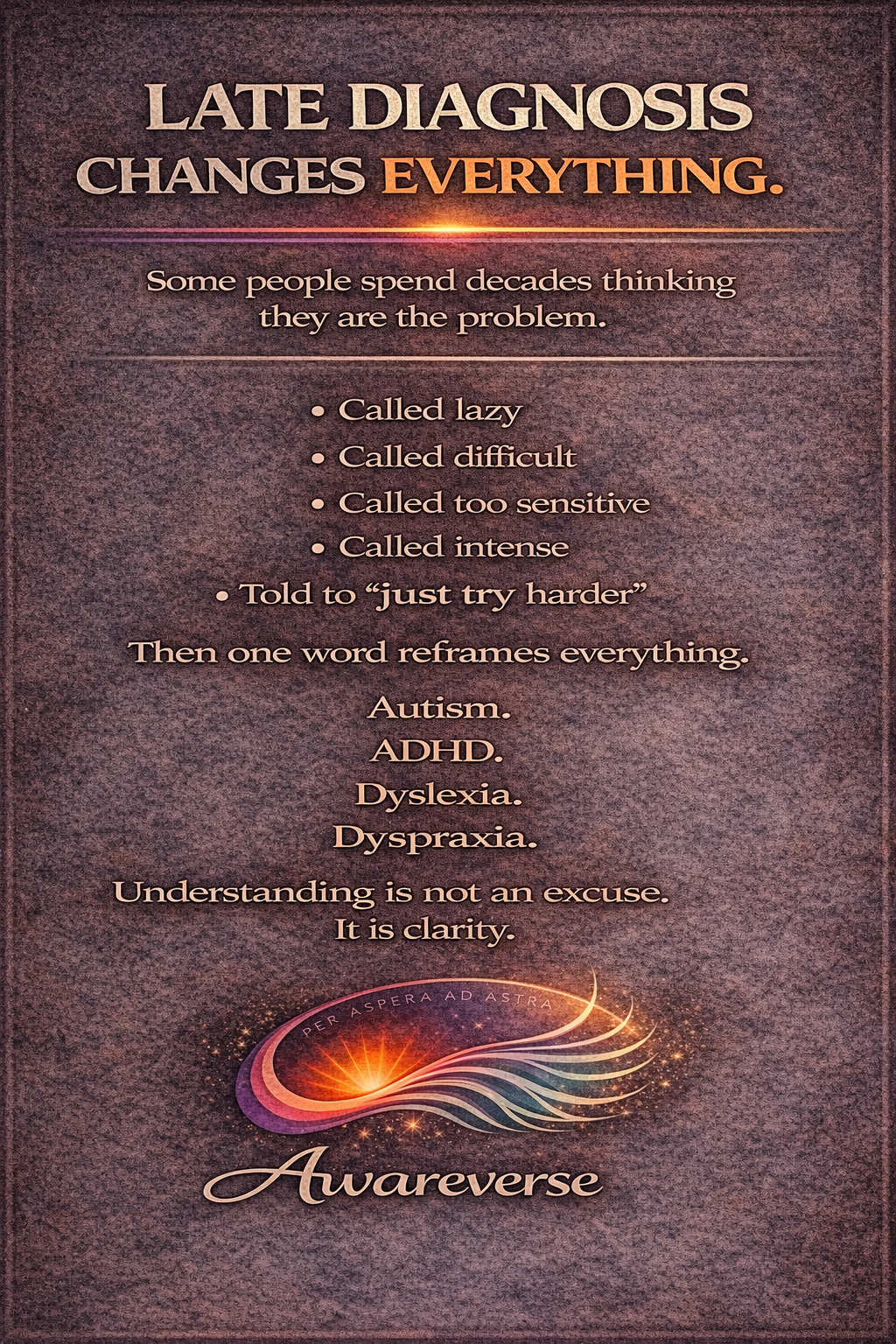
Many adults spend decades thinking they are the problem. A diagnosis does not change who you are. It changes the story you were forced to carry.
Late diagnosis often brings relief and grief at the same time. Relief because you finally have an explanation that fits. Grief because you realise how long you were blamed, shamed, or misunderstood.
Many people learn to survive by overworking, people pleasing, masking, or burning out repeatedly. They are not weak. They were operating without the right map.
Understanding is not an excuse. It is clarity. It helps you separate who you are from what you have been blamed for. It also helps you ask for the right support, set healthier boundaries, and stop measuring yourself by rules that were never designed for you.
The goal is not to become someone else. The goal is to stop abandoning yourself to fit in.
Late diagnosed adults often present as capable because they have spent years compensating. Functioning is not the same as coping. Please listen for burnout, masking, and chronic overwhelm.
A late diagnosis is often a turning point, not a label.
If this helped, share it with someone who has spent years feeling misunderstood.
Download PNG Back to Library