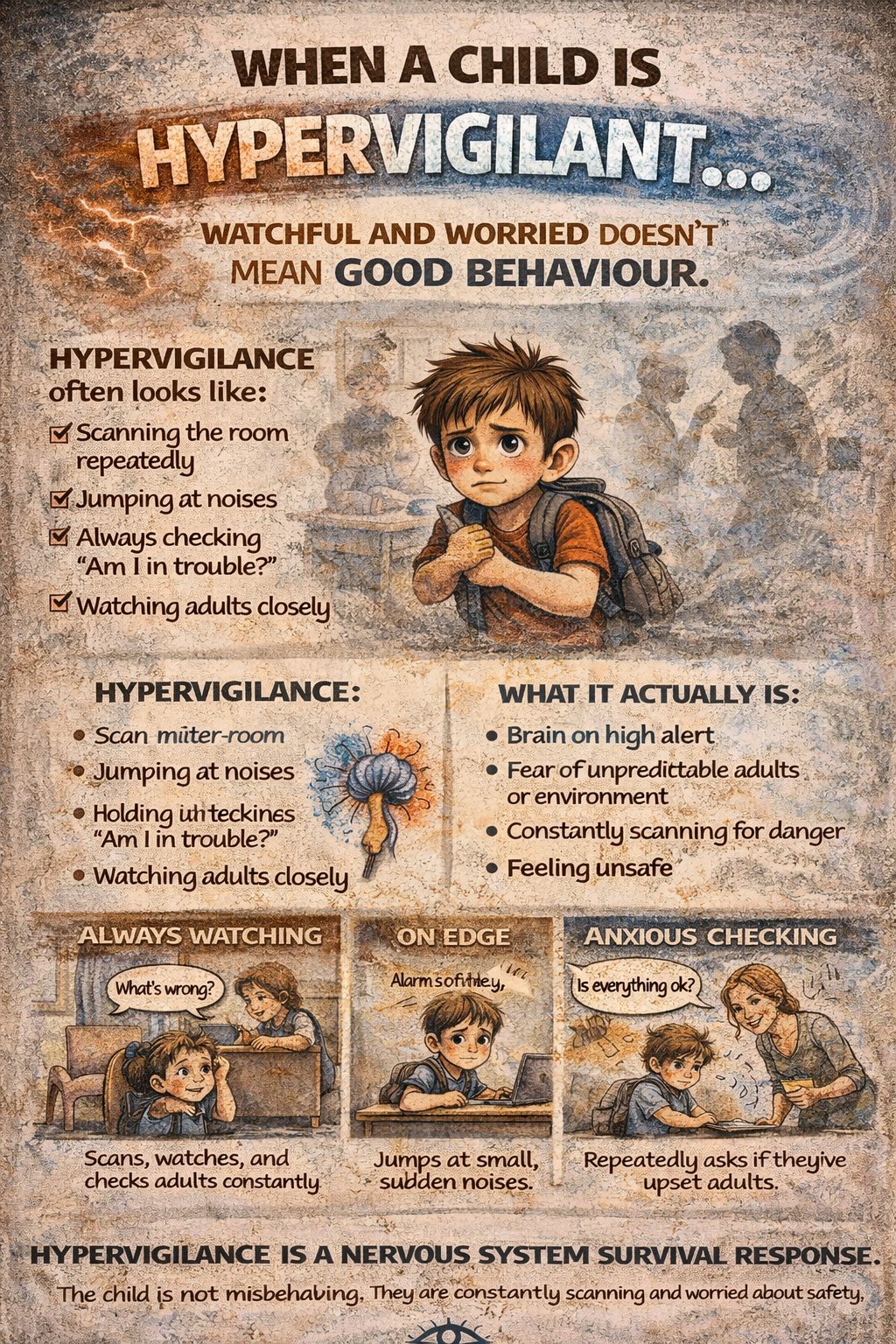
Watchful and worried does not mean good behaviour. It can mean the nervous system is stuck in constant alert.
Hypervigilance is what happens when a nervous system learns that the world does not feel safe. Instead of relaxing, the brain stays switched on and scans constantly for danger, signs of disapproval, and any hint that something bad is coming.
For children, this can come from unpredictable environments, difficult school experiences, anxiety, trauma, or being neurodivergent in a world full of unspoken rules.
A hypervigilant child is not being nosy or dramatic. They are trying to predict and prevent threat.
For autistic and ADHD children, hypervigilance can be common because the social world is harder to read. When you get caught out, misunderstood, or corrected unexpectedly, your brain learns to stay alert.
A child who is constantly watching you is trying to gather enough information to feel safe. That level of alertness uses huge cognitive and emotional resource.
A hypervigilant child cannot learn properly. Their bandwidth is used on safety scanning. Addressing the anxiety beneath the vigilance is not optional. It is the foundation for learning.
The child is not misbehaving. They are worried about safety.
If this helped you, please share it with another parent, teacher, or professional who needs it.
Download PNG Back to Library