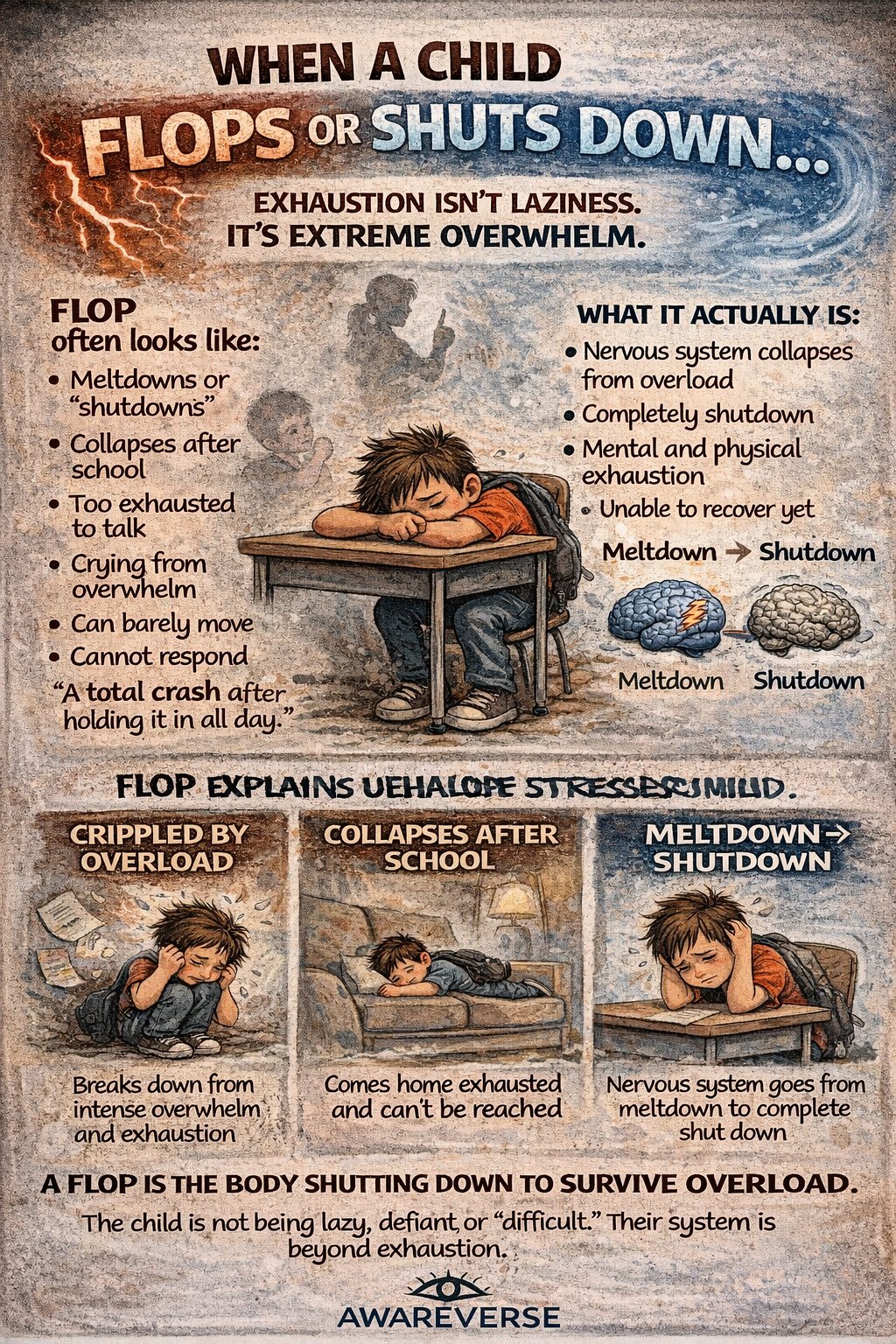
Exhaustion is not laziness. It is extreme overwhelm. When a child flops or shuts down, their system has reached its limit.
Flop and shutdown can sit beyond freeze on the nervous system response scale. Where freeze can be a short halt, flop or shutdown is a deeper collapse. It is physical and emotional exhaustion that the body cannot push through.
This can happen after a meltdown, after sustained masking, or after prolonged stress. The nervous system shuts down like a phone switching off when the battery hits zero. It is not a choice. The child cannot do more right now.
For autistic and ADHD children, flop and shutdown can be a regular experience. Managing sensory input, social demand, and constant effort can deplete nervous system resource faster and recovery can take longer.
Recovery from shutdown can take hours, sometimes the rest of the day.
If a child is regularly experiencing flop or shutdown after school, it is important information. It suggests the school environment is taking more nervous system resource than the child can sustainably give.
This is not a home problem. The crash happens at home because home is safe. The school day is where the exhaustion accumulates.
A child who crashes after school is telling you something about their day. Listen to what the crash is saying.
If this helped you, please share it with another parent, teacher, or professional who needs it.
Download PNG Back to Library