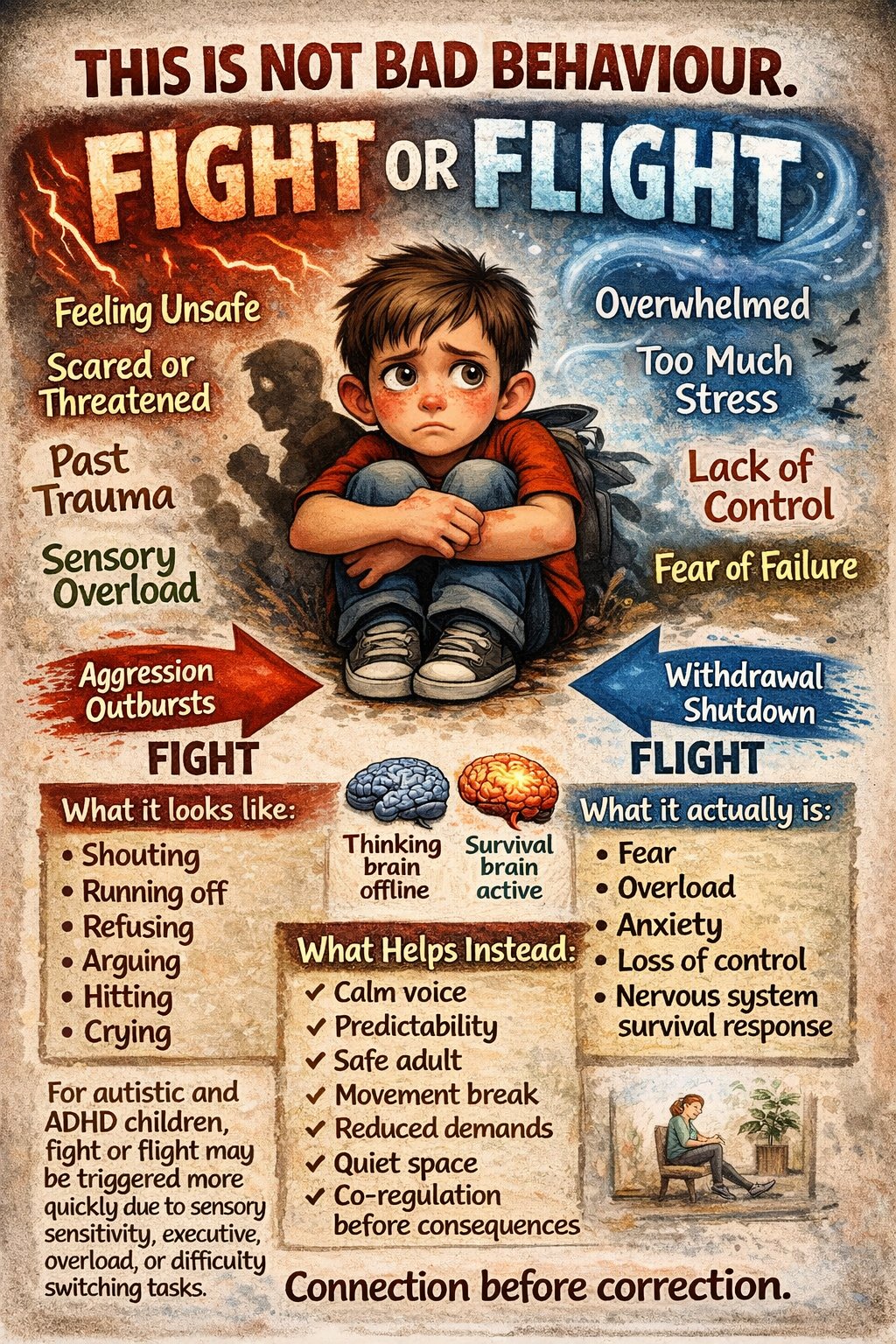
This is not bad behaviour. This is a nervous system in survival mode.
Fight or flight is the body’s automatic response to perceived danger. When the brain decides something is threat, whether physical, emotional, sensory, or social, it can bypass the thinking brain and activate the survival system.
The child is not choosing this response. Their nervous system has made that decision in a fraction of a second. By the time the behaviour is visible, the thinking brain may already be offline.
What it looks like
What it actually is
For many children, and especially autistic and ADHD children, fight or flight can be triggered by:
For neurodivergent children, the threshold can be lower and recovery can take longer.
When a child is in fight or flight, the thinking brain may be offline. Reasoning, consequences, and instructions will not work until the nervous system calms down. What helps first:
Connection before correction. Regulation before expectation.
When a child is in fight or flight, the prefrontal cortex, the area linked to reasoning, self control, and decision making, may be temporarily less available. This is not metaphor, it is how the stress response works.
Sanctions and consequences during a fight or flight episode do not teach regulation. They add threat to a nervous system that is already overwhelmed.
What works is a regulated adult supporting co regulation. Safety first. Learning comes later, once calm returns.
If this helped you, please share it with another parent, teacher, or professional who needs it.
Download PNG Back to Library