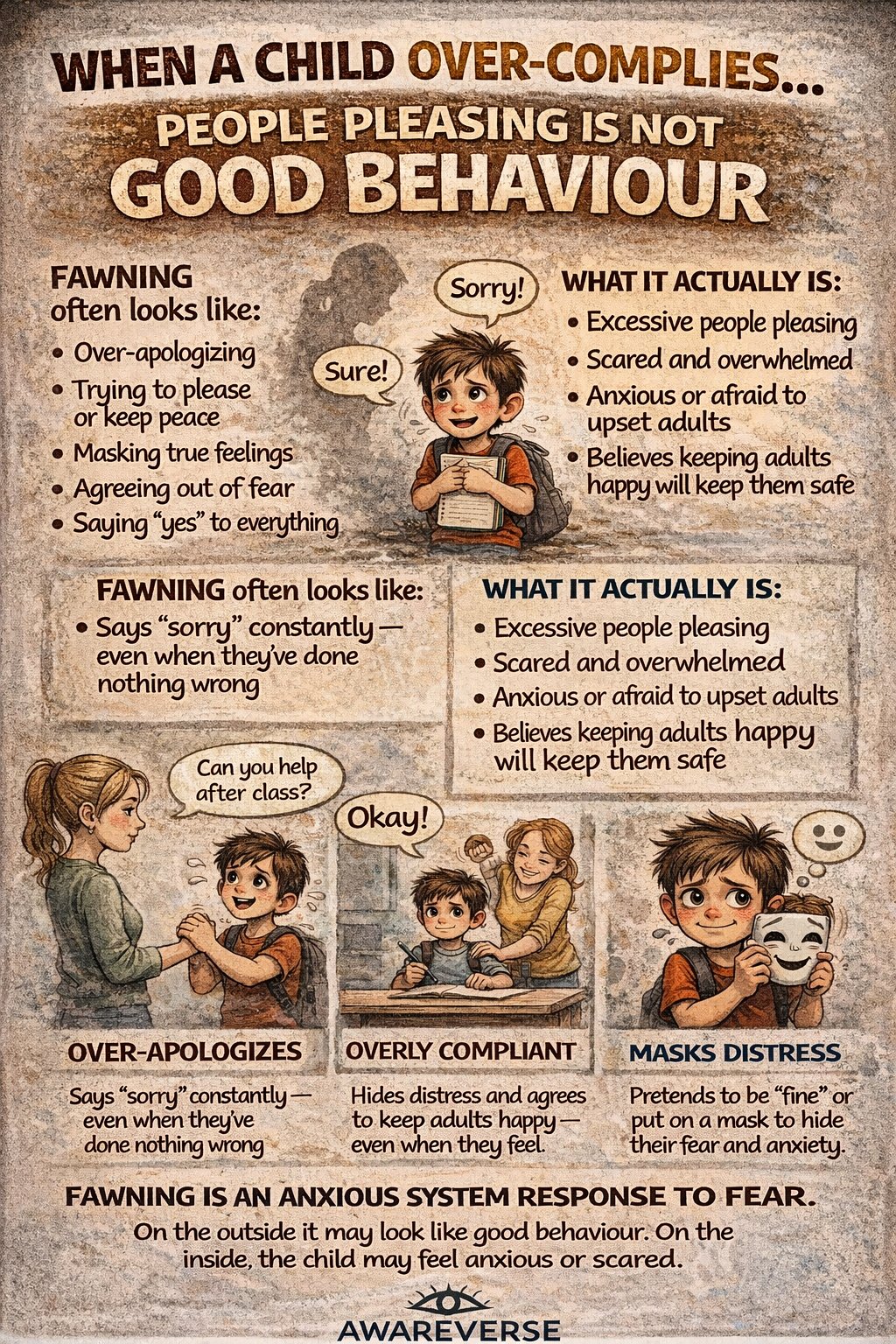
People pleasing is not good behaviour. It is a fear response. Over compliance can hide deep anxiety.
Fawn is a survival response that often gets missed, especially in children. Where fight pushes back and flight runs away, fawn tries to please and keep the peace to stay safe.
A child may learn that making adults happy keeps them out of trouble. So they say yes when they mean no. They apologise when they have done nothing wrong. They watch adults closely and adjust their behaviour to avoid disapproval.
On the outside, it can look like a model child. On the inside, the child is anxious, on edge, and exhausted.
Fawning can be common when adults feel unpredictable, when environments feel harsh, or when a child’s needs have repeatedly been dismissed. It can also be common in anxious children, and in autistic children who have learned that compliance reduces risk.
Fawning children are often seen as the easiest and most agreeable in the room. They rarely show up in behaviour logs. They are often not on anyone’s radar.
But behind the compliance, some of these children are struggling deeply. They spend huge energy managing adult emotions instead of developing their own regulation. Over time, this can have a serious impact.
Good behaviour is not the same as good wellbeing. Always look beneath the surface.
If this helped you, please share it with another parent, teacher, or professional who needs it.
Download PNG Back to Library