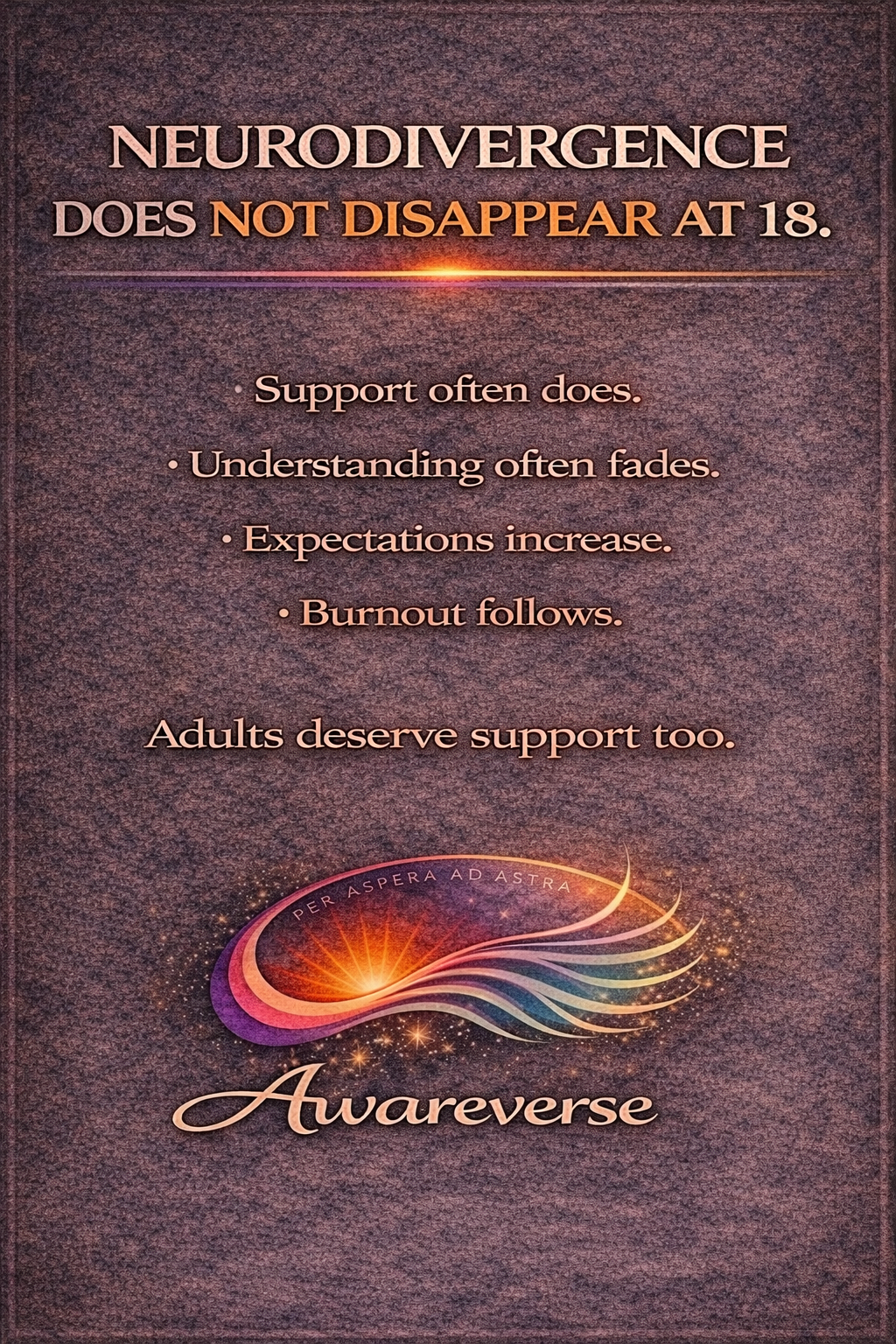
The brain does not change overnight at adulthood. But support often drops away, expectations rise, and burnout follows.
The biggest change is not the person. It is the system around them. Adult services are often harder to access, thresholds are higher, and many people are left to cope alone.
When adults are unsupported, problems get reframed as personal failure. That leads to shame, anxiety, depression, and repeated burnout.
Adults deserve support too.
Many adults do not ask for help until they are already in crisis. Not because they do not need it, but because they have been dismissed for years.
Early support prevents long term harm.
If this helped, share it with someone who thinks support should not end at adulthood.
Download PNG Back to Library