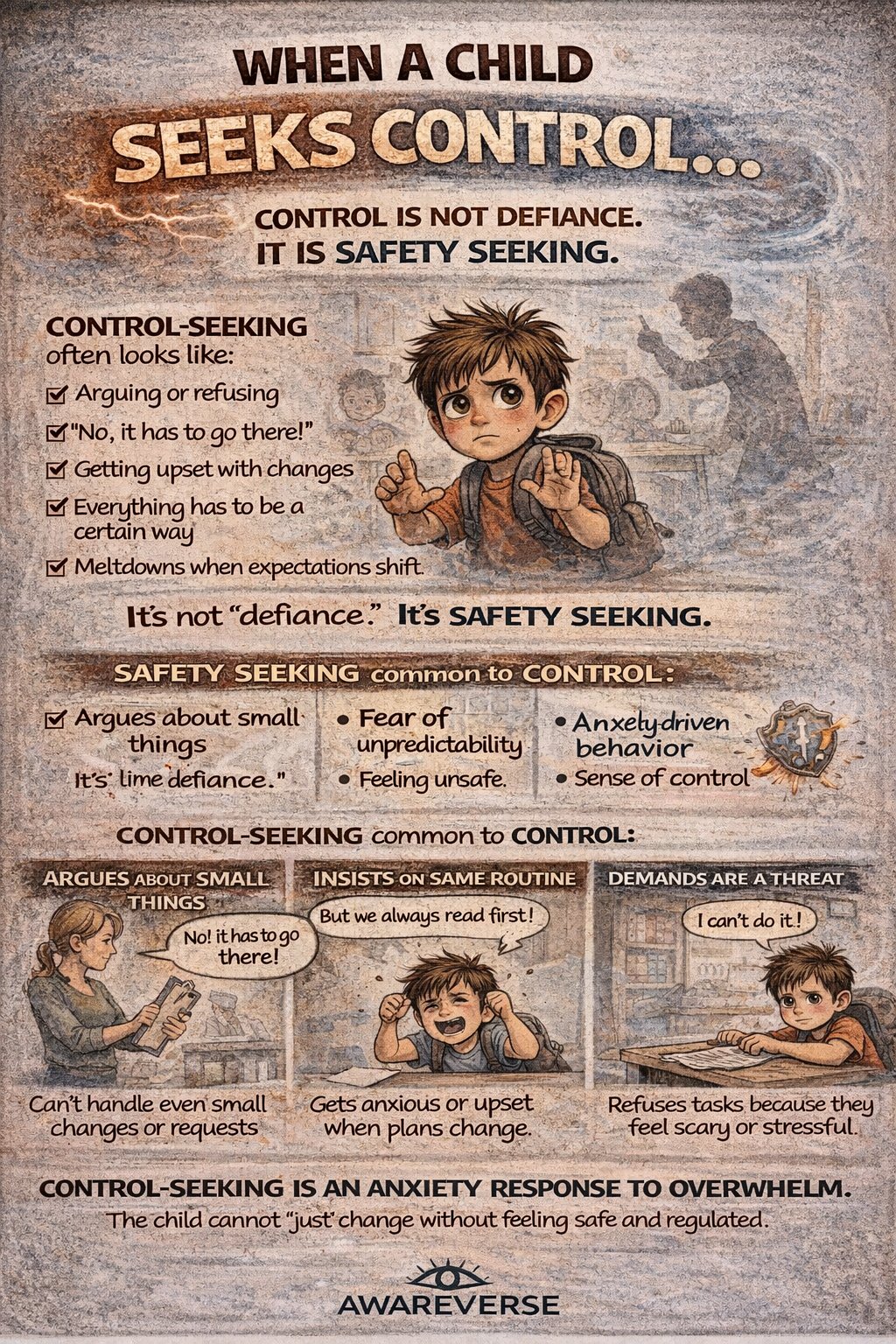
Control is not defiance. It is safety seeking. When everything feels unpredictable, controlling what you can is how the nervous system tries to survive.
Control seeking is what anxiety looks like when it turns outward. When a child feels unsafe, overwhelmed, or unable to predict what happens next, one natural response is to try to control everything they can.
Control creates predictability. Predictability creates safety.
This is not about being bossy or deliberately difficult. It is about a nervous system trying to reduce unpredictability.
For autistic and ADHD children, this can be closely linked to sensory differences, executive function challenges, and anxiety. Their world already feels harder to predict. Control becomes a coping strategy.
Telling a child to just stop trying to control everything removes their coping strategy without replacing the safety underneath it.
When a child argues about where their pencil goes or insists on the same seat, this is not defiance. It is an attempt to create enough predictability to feel safe.
Engaging in power struggles increases anxiety. Giving ownership of small things preserves nervous system energy for coping with larger demands.
A child cannot build flexibility without first feeling safe.
If this helped you, please share it with another parent, teacher, or professional who needs it.
Download PNG Back to Library